
South Korea’s Currency Crisis: Why The Won’s Slide Has Policymakers On Alert?
Introduction
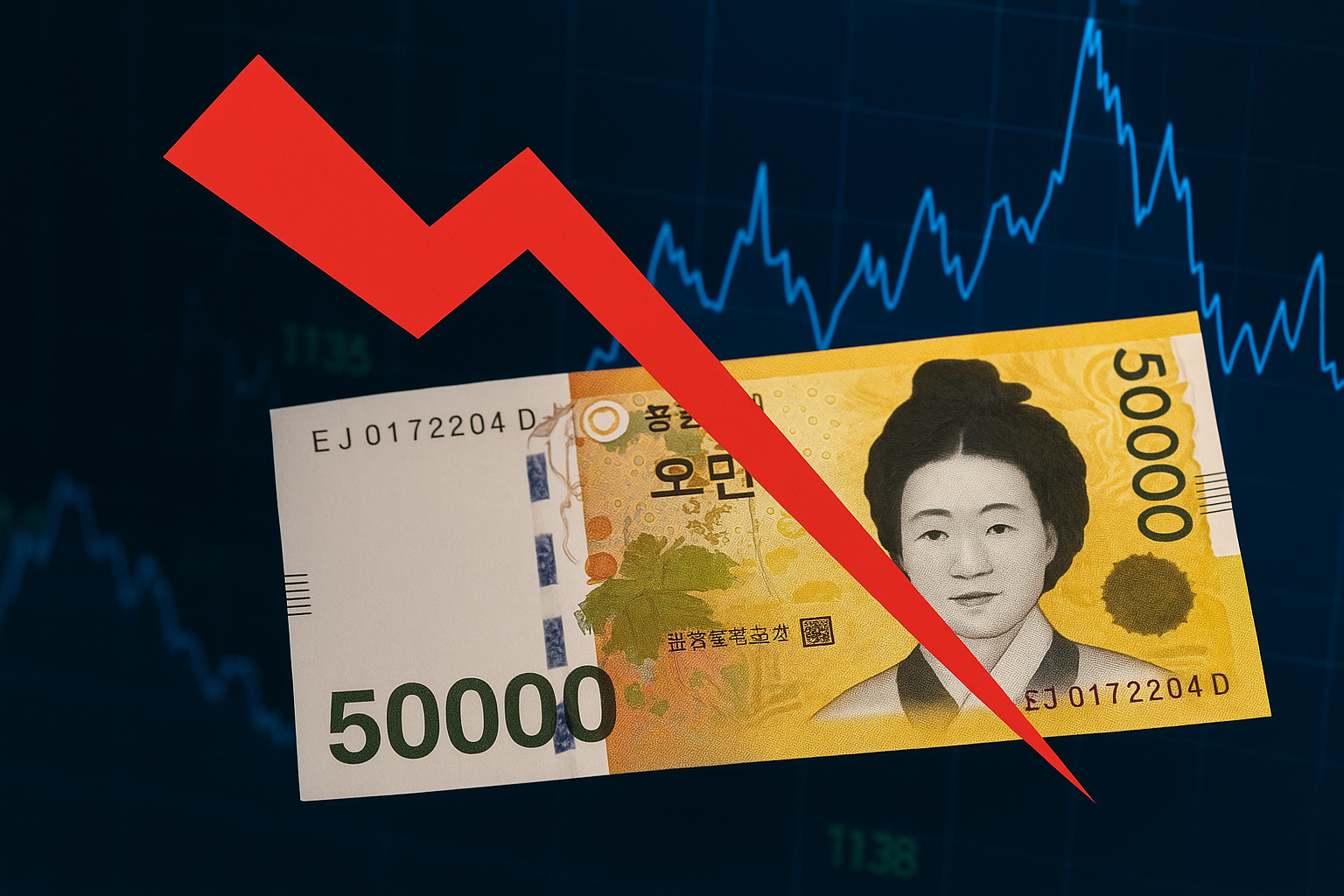
The currency of South Korea, the won, has come under renewed pressure in recent months, prompting alarm from top officials of the central bank. On December 10, 2025, a Bank of Korea board member delivered remarks signaling that authorities can no longer remain passive in the face of a weakening won, warning that doing nothing could exacerbate inflation, erode consumer purchasing power, and dent competitiveness for exporters.
The board member emphasized the urgency of rebalancing foreign exchange supply and demand, stating that authorities cannot sit idle while the won remains under pressure. This warning comes against a backdrop of a roughly five percent drop in the won against the U.S. dollar this quarter, pushing the currency near a 16‑year low.
Why The Won Is Falling: Underlying Causes
Interest Rate Gap Between South Korea and the United States
One of the critical drivers of the won’s depreciation is the widening interest rate differential between South Korea and the United States. The Bank of Korea has kept its policy rate steady, while U.S. rates remain high, producing a significant gap. This differential makes dollar‑denominated assets more attractive, prompting capital outflows from Korean markets and increasing demand for dollars, thereby putting downward pressure on the won.
Domestic Investors Buying Overseas
Another contributing factor is the growing trend of domestic investors in South Korea increasing their holdings of overseas equities. This movement has contributed to capital outflows, further weakening the won amid surging dollar demand. Strong export flows would normally offset such pressure, but the simultaneous shift in investment behavior has worsened foreign exchange market imbalances.
Exporters and Small‑Medium Enterprises Hit Hard
The currency slump affects more than macroeconomic indicators. Exporters without adequate hedging strategies, particularly small and medium-sized enterprises, face rising costs for imported intermediate goods. Many may struggle to absorb these costs, leading to squeezed margins or forced price increases for consumers. This raises concerns that the weakening won could translate into rising inflation as firms pass on higher input costs.
What Authorities Are Considering: Calls for Action and Potential Measures
Although the board member did not outline a detailed playbook, he stressed the need to consider measures aimed at adjusting supply and demand in the foreign exchange market. The Bank of Korea, along with other government financial authorities and the National Pension Service, has established a consultative group to draft a new framework designed to stabilize the foreign exchange market.
One idea under consideration is allowing the National Pension Service to issue dollar-denominated bonds in offshore markets. This move could help inject more dollars into the system and reduce pressure on the won. While no definitive policy decisions have been announced, the increasingly vocal stance from both monetary and fiscal authorities suggests that intervention, direct or indirect, is becoming more likely if the won’s slide continues.
Possible Impacts: Inflation, Consumer Prices, And Economic Competitiveness
Inflation and Consumer Purchasing Power
A weaker won tends to make imported goods more expensive, from raw materials to consumer electronics, fuel, and food supplies. Households could face higher prices as a result. For small businesses and SMEs that rely on imported intermediate goods and lack hedging strategies, this could erode profit margins or force them to raise prices, further impacting consumers.
Export Sector: Mixed Blessings
Normally, a weaker currency benefits exporters by making their goods cheaper for foreign buyers. However, in this case, the dynamic is less straightforward. Many exporters rely on imported components rather than purely domestic inputs, so rising import costs could offset any competitive advantage gained via currency depreciation. Small and medium-sized exporters, often operating on tighter margins, could be especially vulnerable.
Investor Sentiment and Foreign Capital Flows
The won’s slide, if prolonged, could erode confidence among foreign investors. A weakening won reduces dollar-denominated returns for investors converting back to their home currency, potentially dampening foreign equity and bond inflows. Persistent currency depreciation also raises the risk of capital flight, creating a feedback loop that further depresses the won.
Challenges Ahead: What Makes This Situation Difficult?
Limited Immediate Tools
Unlike interest rate adjustments, direct foreign exchange intervention is often costly and may offer only temporary relief, especially if structural factors such as rate differentials and overseas investment behavior remain in place. Policymakers face a trade-off between stabilizing the won and preserving long-term financial stability.
Risk of Undermining Policy Credibility
Frequent or heavy-handed intervention can signal desperation, potentially confusing markets about the central bank’s long-term monetary policy goals. This could erode trust in monetary stability, especially if interventions fail or need to be repeated.
External Pressures
Part of the won’s decline stems from global factors, chiefly the interest rate gap with the United States. Seoul’s options for stabilization may be limited unless international conditions change. Any resolution may depend not just on domestic actions but also on shifts in U.S. monetary policy, global investor sentiment, and broader financial flows.
What Happens Next: Scenarios To Watch
Policy intervention via foreign exchange supply adjustment — The consultative group could propose steps such as dollar bond issuance or coordinated dollar sales to stabilize the won.
Support for SMEs and exporters — Authorities might provide support to small and medium-sized firms to manage currency-related cost pressures or encourage hedging strategies.
Interest rate and monetary policy recalibrations — Persistent currency weakness and inflation risks could prompt the Bank of Korea to reconsider its rate path, potentially limiting further cuts or even tightening in extreme scenarios.
Market-driven stabilization — Changes in global interest rates, improved risk sentiment, or reversals in domestic investment patterns could stabilize the won without direct intervention.
Conclusion
The depreciation of the won is not just a technical currency-market story. It has tangible implications for South Koreans, the competitiveness of exporters, and the stability of financial markets. The public warning from a senior figure at the Bank of Korea underscores how serious authorities view the situation.
At stake are inflation, consumer purchasing power, corporate profits, and investor confidence. The coming weeks and months will reveal whether Korean policymakers can design and implement effective measures before deeper economic consequences take hold.