
Global Forex Market Outlook Amid Rising Geopolitical Uncertainty
Introduction
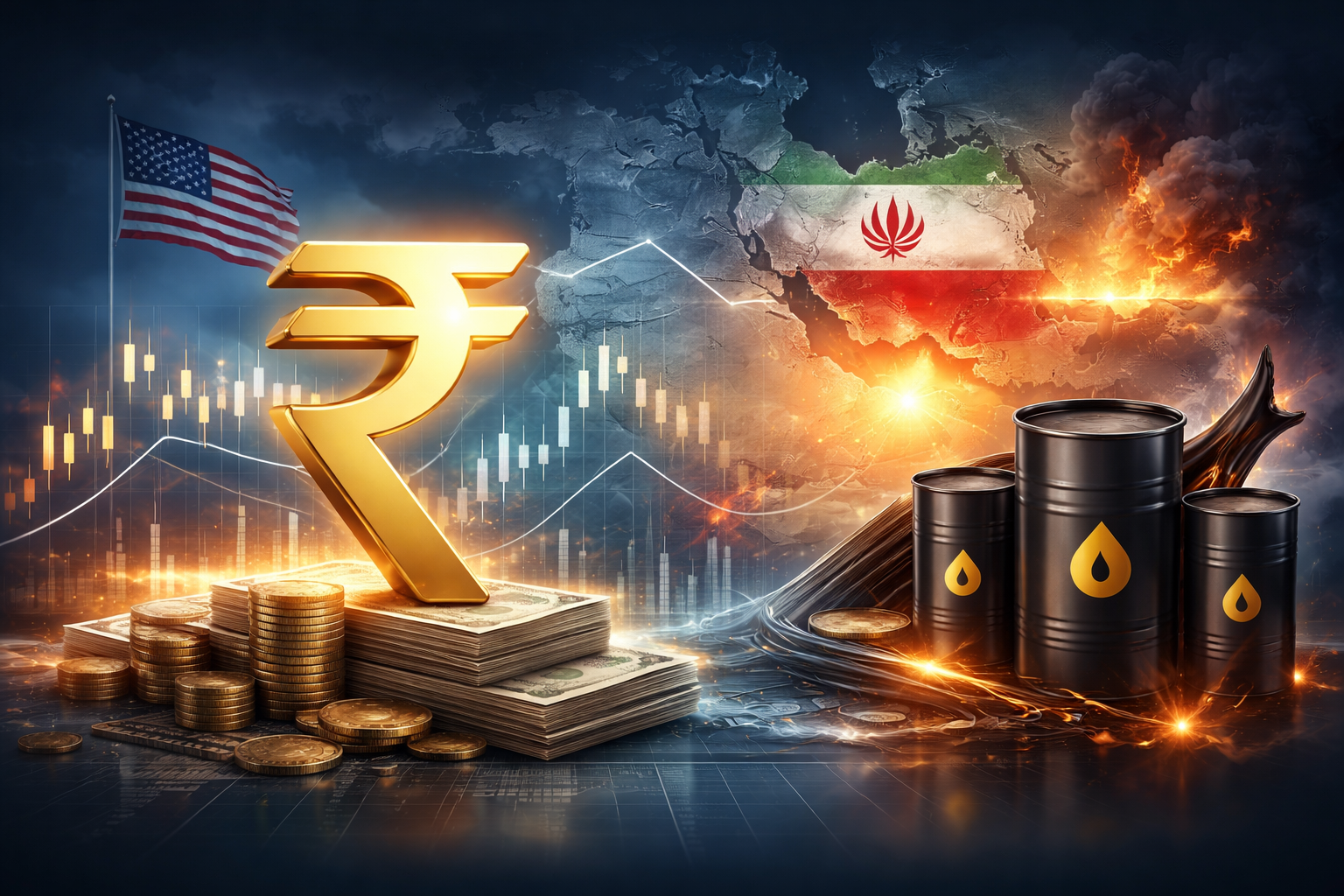
The global foreign exchange market in 2026 is currently navigating one of its most volatile and uncertain phases, shaped by a combination of geopolitical tensions, fluctuating commodity prices, and shifting monetary policies across major economies. Among the most influential developments is the uncertainty surrounding relations between the United States and Iran, which has created ripple effects across financial markets worldwide. Forex markets, by their nature, respond quickly to global instability, and the current environment reflects how sensitive currencies are to political developments and economic risks. Investors and traders are increasingly cautious, trying to balance short term opportunities with long term risks, while closely monitoring every signal emerging from global power centers.
Indian Rupee Movement And Market Dynamics
The Indian rupee has recently displayed significant volatility, reflecting the broader pressures facing emerging market currencies. The rupee initially showed signs of strength, opening slightly higher as market participants reacted to hopes of stability in geopolitical tensions. However, this positive momentum was short lived as uncertainty quickly overshadowed optimism. The rupee reversed its gains due to rising demand for the US dollar, particularly from importers who require dollars to pay for commodities such as crude oil.
This pattern highlights a key structural challenge for the Indian economy. As one of the largest importers of crude oil in the world, India is highly sensitive to changes in global oil prices. When oil prices rise, the demand for dollars increases, placing downward pressure on the rupee. At the same time, foreign investors often reduce their exposure to emerging markets during periods of uncertainty, leading to capital outflows that further weaken the currency. The rupee’s recent movements are therefore not just a reflection of domestic conditions but also of broader global forces that influence capital flows and investor sentiment.
Role Of US Iran Ceasefire In Forex Volatility
The ongoing uncertainty surrounding the ceasefire situation between the United States and Iran has become a central factor influencing forex markets. What was initially seen as a potential step toward stability has instead introduced a new layer of unpredictability. Conflicting developments and escalating tensions have raised doubts about the sustainability of peace efforts in the region.
This uncertainty has had a direct impact on investor behavior. Traders are increasingly cautious, avoiding aggressive positions and instead opting for safer assets. The situation in the Middle East is particularly important because of its impact on global oil supply routes. Any disruption in these routes could lead to significant spikes in oil prices, which would in turn affect inflation, trade balances, and currency values across the world.
As a result, the forex market is experiencing heightened volatility, with rapid shifts in currency values driven by news and speculation related to geopolitical developments. This environment makes it challenging for traders to predict market movements, as even minor developments can trigger significant reactions.
Oil Prices As A Key Driver Of Currency Movements
Oil prices have emerged as one of the most critical factors influencing currency markets in the current global environment. The relationship between oil and forex markets is particularly evident in countries that rely heavily on energy imports. When oil prices increase, these countries face higher import costs, leading to increased demand for foreign currency and a subsequent weakening of their domestic currencies.
In recent weeks, oil prices have shown significant fluctuations, driven by changing expectations about geopolitical stability. Concerns about potential supply disruptions have pushed prices higher, while hopes of diplomatic resolution have led to temporary declines. These rapid changes create uncertainty not only in energy markets but also in currency markets, where traders must constantly adjust their strategies.
The impact of oil prices extends beyond immediate currency movements. Higher oil prices can contribute to inflation, which may prompt central banks to adjust interest rates. These policy changes, in turn, influence capital flows and exchange rates. Thus, oil acts as a key link between geopolitical events and economic outcomes, making it a central focus for forex traders.
Impact Of Dollar Demand And Capital Flows
The US dollar continues to play a dominant role in the global financial system, serving as the primary reserve currency and a preferred safe haven during times of uncertainty. In the current environment, increased demand for the dollar has been a major factor influencing currency movements. Importers, investors, and financial institutions have all contributed to this demand, seeking stability in the face of global risks.
At the same time, capital flows have become increasingly volatile. Investors are reallocating their portfolios in response to changing risk perceptions, often moving funds away from emerging markets and into more stable economies. This shift results in reduced availability of foreign currency in emerging markets, putting additional pressure on local currencies.
For countries like India, these dynamics create a challenging situation. While domestic economic fundamentals may remain relatively stable, external factors such as global interest rates and investor sentiment can have a significant impact on currency values. Managing these external influences requires careful coordination between monetary policy, fiscal policy, and market interventions.
Central Bank Interventions And Policy Measures
Central banks play a crucial role in managing currency stability, particularly during periods of heightened volatility. The Reserve Bank of India has taken several steps to address the recent fluctuations in the rupee. These measures include direct intervention in the foreign exchange market, as well as regulatory adjustments aimed at improving liquidity and reducing speculative pressures.
One of the key strategies employed by central banks is to use foreign exchange reserves to stabilize the currency. By selling dollars and buying the domestic currency, the central bank can help support its value. However, such interventions are typically used sparingly, as they can deplete reserves over time.
In addition to direct interventions, central banks may also adjust interest rates or implement policy changes to influence market behavior. These measures can help attract foreign investment and support the currency, but they must be carefully calibrated to avoid unintended consequences such as slowing economic growth.
Global Market Sentiment And Risk Appetite
Investor sentiment plays a critical role in shaping forex market trends. In the current environment, uncertainty has led to a cautious approach among market participants. This risk off sentiment is characterized by a preference for safer assets, such as the US dollar and government bonds, at the expense of riskier investments like emerging market currencies.
This shift in sentiment has important implications for currency markets. As investors move their funds into safer assets, demand for those assets increases, leading to appreciation in their value. Conversely, currencies associated with higher risk tend to weaken as capital flows out of those markets.
The relationship between risk sentiment and currency movements is dynamic and can change rapidly in response to new information. For example, positive developments in geopolitical negotiations can quickly restore investor confidence, leading to a reversal of capital flows and a strengthening of previously weakened currencies.
Broader Implications For The Global Economy
The developments in the forex market have far reaching implications for the global economy. Exchange rates influence a wide range of economic variables, including trade competitiveness, inflation, and economic growth. For export oriented economies, a weaker currency can provide a competitive advantage by making their goods more affordable in international markets. However, this benefit may be offset by higher import costs, particularly for essential commodities such as energy.
In the case of India, the recent depreciation of the rupee presents both challenges and opportunities. While higher import costs may contribute to inflation, a weaker currency could support export growth in sectors such as manufacturing and services. The overall impact will depend on how these factors balance out over time.
Globally, the current environment of uncertainty underscores the importance of economic resilience and policy flexibility. Countries must be prepared to respond to rapidly changing conditions, using a combination of monetary, fiscal, and structural measures to maintain stability and support growth.
Future Outlook For Forex Markets
Looking ahead, the direction of forex markets will depend on several key factors, with geopolitical developments at the forefront. The outcome of negotiations and tensions between major global powers will play a critical role in shaping market sentiment and determining the stability of commodity prices.
If geopolitical tensions ease and oil markets stabilize, there is potential for a recovery in emerging market currencies. This would likely be accompanied by a shift in investor sentiment toward higher risk assets. On the other hand, any escalation in tensions could lead to further strengthening of the US dollar and increased volatility in global currency markets.
In addition to geopolitical factors, monetary policy decisions by major central banks will continue to influence exchange rates. Interest rate differentials, inflation trends, and economic growth prospects will all play a role in determining the flow of capital and the relative strength of currencies.
Conclusion
The global forex market in 2026 is characterized by a complex interplay of geopolitical risks, commodity price fluctuations, and economic policy decisions. The recent movements of the Indian rupee highlight the challenges faced by emerging market currencies in navigating this uncertain environment.
Uncertainty surrounding geopolitical developments, particularly in the Middle East, has emerged as a key driver of market volatility. At the same time, fluctuations in oil prices and shifts in investor sentiment have added to the complexity of the situation.