
Emerging Economies Under Pressure: Rising Risks From Currency Shocks And Global Financial Volatility
Introduction
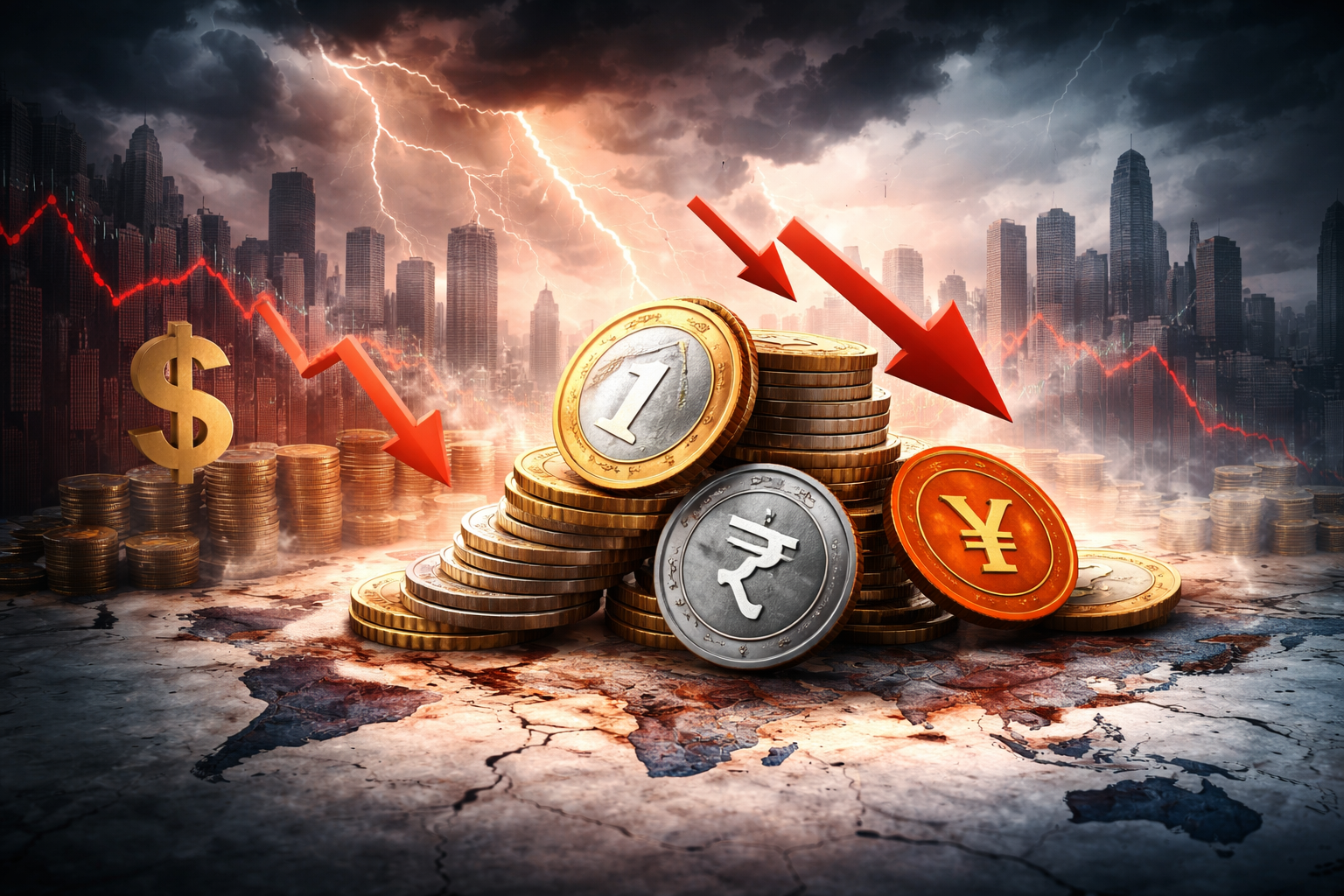
Emerging economies across the world are entering a period of heightened financial vulnerability as global economic conditions become increasingly uncertain. A combination of geopolitical tensions, volatile capital flows, rising global interest rates, and structural weaknesses in financial systems is exposing these economies to significant risks. The International Monetary Fund has highlighted growing concerns that many developing nations are now more dependent on short-term, market-driven financing, making them highly sensitive to sudden shifts in investor sentiment. These shifts can lead to rapid capital outflows, currency depreciation, and spikes in borrowing costs, all of which can destabilize economic growth and financial stability.
The current global environment, marked by geopolitical conflicts and persistent inflationary pressures, is amplifying these risks. As investors reassess risk in light of uncertainty, emerging markets often bear the brunt of capital flight and financial tightening. This dynamic underscores the fragile balance these economies must maintain while navigating external shocks and internal constraints.
Changing Structure Of Global Capital Flows
Over the past two decades, the structure of capital flows into emerging economies has undergone a significant transformation. Traditional bank lending has declined in relative importance, while portfolio investments from hedge funds, asset managers, and institutional investors have surged. These investors provide large pools of capital that can support economic development, but they also tend to be highly sensitive to global market conditions.
Unlike long-term investors such as pension funds, short-term investors can withdraw funds quickly in response to perceived risks. This creates a situation where emerging markets become heavily exposed to sudden reversals in capital flows. In periods of global stability, these inflows can support growth, finance infrastructure, and stimulate investment. However, when uncertainty rises, the same capital can exit rapidly, leaving economies vulnerable to liquidity shortages and financial stress.
The increasing reliance on market-based financing has made emerging economies more interconnected with global financial cycles. As a result, domestic economic conditions are often influenced not only by local policies but also by external factors such as interest rate changes in advanced economies and shifts in global risk appetite.
Impact Of Geopolitical Tensions On Financial Stability
Geopolitical conflicts, particularly those involving major energy-producing regions, have far-reaching implications for global markets. When tensions escalate, investors tend to move toward safer assets, triggering capital outflows from emerging markets. This phenomenon can lead to currency depreciation, increased borrowing costs, and tighter financial conditions.
Energy markets are especially sensitive to geopolitical disruptions. Any instability affecting major oil transit routes or production centers can lead to sharp increases in oil prices. Higher energy costs contribute to inflation globally, forcing central banks to adopt tighter monetary policies. These policy responses, while necessary to control inflation, can further strain emerging economies by raising interest rates and reducing liquidity in global markets.
The interconnected nature of global finance means that geopolitical shocks are transmitted quickly across borders. Emerging economies with limited financial buffers and weaker institutional frameworks are particularly exposed to these spillover effects. In such environments, maintaining economic stability becomes increasingly challenging.
Currency Depreciation And Its Economic Consequences
Currency depreciation is one of the most immediate and visible effects of capital outflows from emerging markets. When investors withdraw funds, demand for the local currency declines, leading to a fall in its value relative to major global currencies. This depreciation can have multiple consequences for the domestic economy.
First, it increases the cost of imports, including essential goods such as food, fuel, and machinery. This can contribute to higher inflation, reducing purchasing power for households and increasing costs for businesses. Second, it raises the burden of foreign-denominated debt. Governments and corporations that have borrowed in foreign currencies face higher repayment costs when their local currency weakens.
In many emerging economies, foreign exchange reserves are limited, restricting the ability of central banks to intervene effectively in currency markets. As a result, policymakers may be forced to raise interest rates sharply to defend the currency and stabilize inflation. While such measures can help restore confidence, they also slow economic growth by increasing the cost of borrowing for businesses and consumers.
Currency volatility can also undermine investor confidence, discouraging long-term investment. Businesses may delay expansion plans due to uncertainty about future exchange rates, leading to slower job creation and reduced economic activity.
The Role Of High Interest Rates In Amplifying Risks
Global interest rate trends play a crucial role in shaping capital flows and financial stability in emerging economies. When interest rates rise in advanced economies, investors are often attracted to safer assets that offer higher returns with lower risk. This can trigger capital outflows from emerging markets, putting downward pressure on their currencies.
Higher interest rates in emerging economies may be required to retain capital and stabilize exchange rates. However, this creates a challenging trade-off. While higher rates can support currency stability, they also increase borrowing costs for governments, businesses, and households. This can dampen investment, slow economic growth, and strain public finances.
In highly indebted economies, rising interest rates can significantly increase debt servicing costs, raising concerns about fiscal sustainability. Governments may face difficult decisions between maintaining economic stability and managing public debt levels. These pressures can limit policy flexibility and constrain long-term development efforts.
Financial System Vulnerabilities And Market-Based Financing
The growing role of non-bank financial institutions in emerging markets has introduced new dimensions of risk. Hedge funds, private equity firms, and other market-based investors often operate with higher leverage and shorter investment horizons. While they provide liquidity and access to capital, their behavior can be procyclical, amplifying both booms and downturns.
In times of stress, these investors may rapidly reduce exposure to riskier assets, leading to sharp declines in asset prices and increased market volatility. This can create feedback loops where falling prices trigger further withdrawals, exacerbating financial instability.
Additionally, the expansion of private credit markets and digital financial instruments has added complexity to the financial system. These sectors are often less regulated than traditional banking systems, making it more difficult for policymakers to monitor risks and implement safeguards. Lack of transparency and oversight can increase the likelihood of systemic shocks during periods of market stress.
Stablecoins And Emerging Financial Technologies
The rise of digital financial assets, including stablecoins, has introduced both opportunities and challenges for emerging economies. Stablecoins are designed to maintain a stable value, often pegged to major currencies, and are used for cross-border transactions and digital payments.
While they can enhance financial inclusion and efficiency, stablecoins also pose risks if not properly regulated. Concerns include the adequacy of reserves backing these assets, the potential for rapid withdrawals, and the lack of consistent regulatory frameworks across jurisdictions. In times of financial stress, large-scale redemption of stablecoins could lead to liquidity shortages and spillover effects in broader financial markets.
As digital finance continues to evolve, regulators in emerging economies face the challenge of balancing innovation with financial stability. Ensuring transparency, adequate oversight, and robust regulatory frameworks will be essential to mitigate potential risks associated with these new financial instruments.
Policy Challenges And The Need For Resilience
Emerging economies must navigate a complex policy environment characterized by external shocks and internal constraints. Strengthening macroeconomic fundamentals is critical to building resilience against financial volatility. This includes maintaining adequate foreign exchange reserves, managing public debt prudently, and implementing credible monetary and fiscal policies.
Central banks play a key role in stabilizing inflation and managing exchange rate pressures. However, their ability to respond effectively depends on institutional independence, policy credibility, and access to financial tools. Coordination between monetary and fiscal authorities is also important to ensure consistent and effective policy responses.
Structural reforms are equally important for long-term stability. Investments in infrastructure, education, healthcare, and governance can enhance productivity and improve economic resilience. Diversifying economies away from overreliance on specific sectors or external financing sources can also reduce vulnerability to external shocks.
Global Economic Outlook And Emerging Market Exposure
The broader global economic environment remains uncertain, with inflationary pressures, geopolitical tensions, and uneven growth patterns shaping the outlook. Advanced economies are tightening monetary policy to combat inflation, which has implications for capital flows to emerging markets. As interest rates rise in developed countries, the relative attractiveness of emerging market assets may decline.
At the same time, global trade dynamics are evolving, with supply chain reconfigurations and shifting geopolitical alliances influencing economic relationships. Emerging economies must adapt to these changes while maintaining competitiveness and financial stability.
For many developing countries, external financing remains essential for growth and development. However, dependence on volatile capital flows increases exposure to global financial cycles. Managing this dependence requires careful policy design and robust institutional frameworks.
Long-Term Structural Challenges
Beyond immediate financial risks, emerging economies face long-standing structural challenges that affect their ability to withstand shocks. These include limited access to capital markets, underdeveloped financial systems, governance issues, and infrastructure gaps. Addressing these challenges requires sustained investment and policy commitment over time.
Human capital development is particularly important. Education and skill development can enhance productivity and support economic diversification. Similarly, improvements in governance and institutional quality can strengthen investor confidence and support sustainable growth.
Reducing reliance on external financing by developing domestic capital markets can also improve resilience. Deeper and more liquid local financial markets can help absorb shocks and reduce exposure to volatile international capital flows.
Conclusion
Emerging economies are facing a convergence of risks driven by geopolitical tensions, volatile capital flows, rising global interest rates, and structural vulnerabilities in financial systems. The increased reliance on market-based financing has made these economies more sensitive to global risk sentiment, while currency shocks and capital outflows continue to pose significant challenges.
The warning from international financial institutions highlights the need for stronger policy frameworks, improved regulatory oversight, and long-term structural reforms. By building financial resilience, maintaining macroeconomic stability, and investing in sustainable development, emerging economies can better navigate the uncertainties of the global financial landscape.